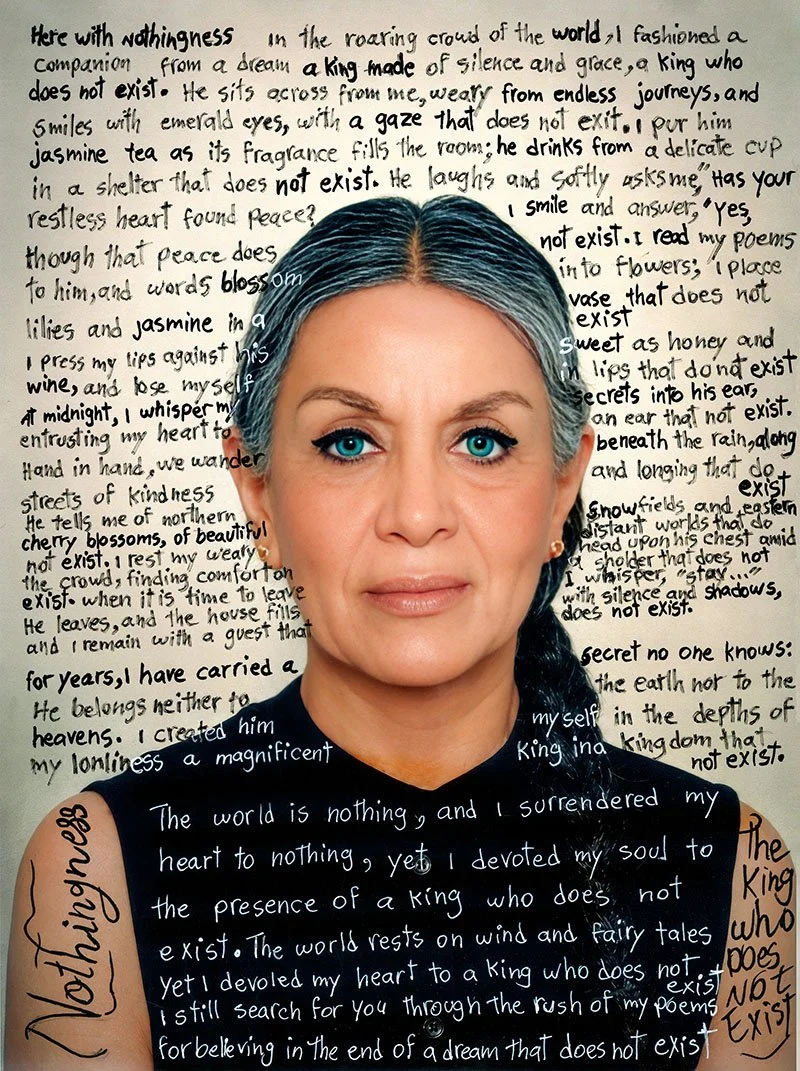
From the chronicles of Mery Zamani
EN / 日本語
Mery Zamani (mosarz)
The Woman Who Painted the Song of the Stars in Silence
My journey began on April 23, 1961, with a child who, long before she knew the world, seemed to find a way to express what she felt.
My name is Mery Zamani; and in the world of creation, I became known by my artistic name, mosarz.
My entire life has been a journey in search of a hidden thread connecting humanity, nature, beauty, sorrow, and existence—a thread that sometimes reveals itself in a poem, sometimes in a geometric line, sometimes in the movement of a star, and sometimes in the silence of a painting.
This path began in childhood and, many years later, came together in The Silent Oracle.
The Child Who Began with Sound
Chapter I
My first artistic activity began with radio and a children’s program.
As a child, I appeared on a children’s radio program and recited children’s poems. There, for the first time, I entered the world of sound, poetry, and performance.
Radio was more than a medium to me; it was the first place where I understood that a voice could travel across distance and reach another human heart.
At the age of nine, poetry began to flow more deeply through me.
The words came as though I were receiving them from somewhere far away. I did not feel that I was creating them; it was more as if a window had opened within me and the words were passing through it.
My father published some of my poems in newspapers anonymously. He did not want early recognition to alter the delicate roots of my imagination and intuition.
He wanted me to learn to see the world before others began to see me.
So my childhood passed through observation: watching ants, listening to the growth of plants, looking toward the sky, and finding meaning in things that others might simply pass by.
Perhaps that was where the first seeds of my painting were planted.
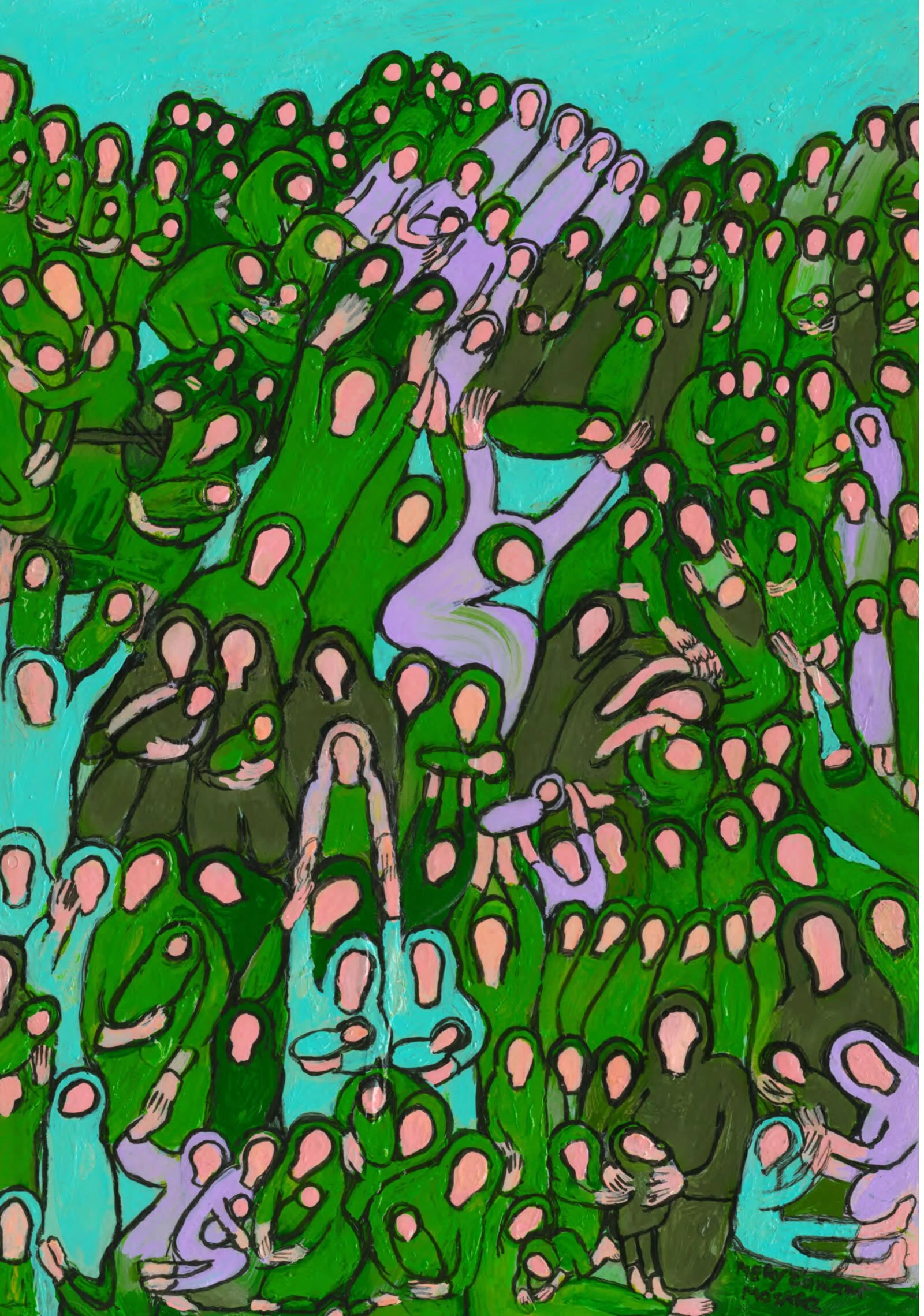
The Marriage of Geometry and Sorrow
Chapter II
Alongside poetry, my interest in mathematics, astronomy, and geometry began to take shape.
In the movement of the stars, I saw a kind of order that filled me with wonder.
In nature, I sometimes saw disorder; yet beneath it, I sensed a quiet and hidden harmony.
That vision later entered the language of my paintings.
To me, geometry was never merely lines and angles.
It could be the skeleton of an emotion.
Numbers could have rhythm.
And disorder could be a form of order that the human eye had not yet learned to discover.
Alongside my studies of psychology and philosophy, the inner world of the human being also became important to me.
Gradually, I understood that science and art are two languages approaching the same question:
What do we see in this world, and what do we feel?
When I took the brush into my hands, I stood between order and freedom; between geometry and emotion, reason and intuition.
Painting became the place where these worlds could meet.
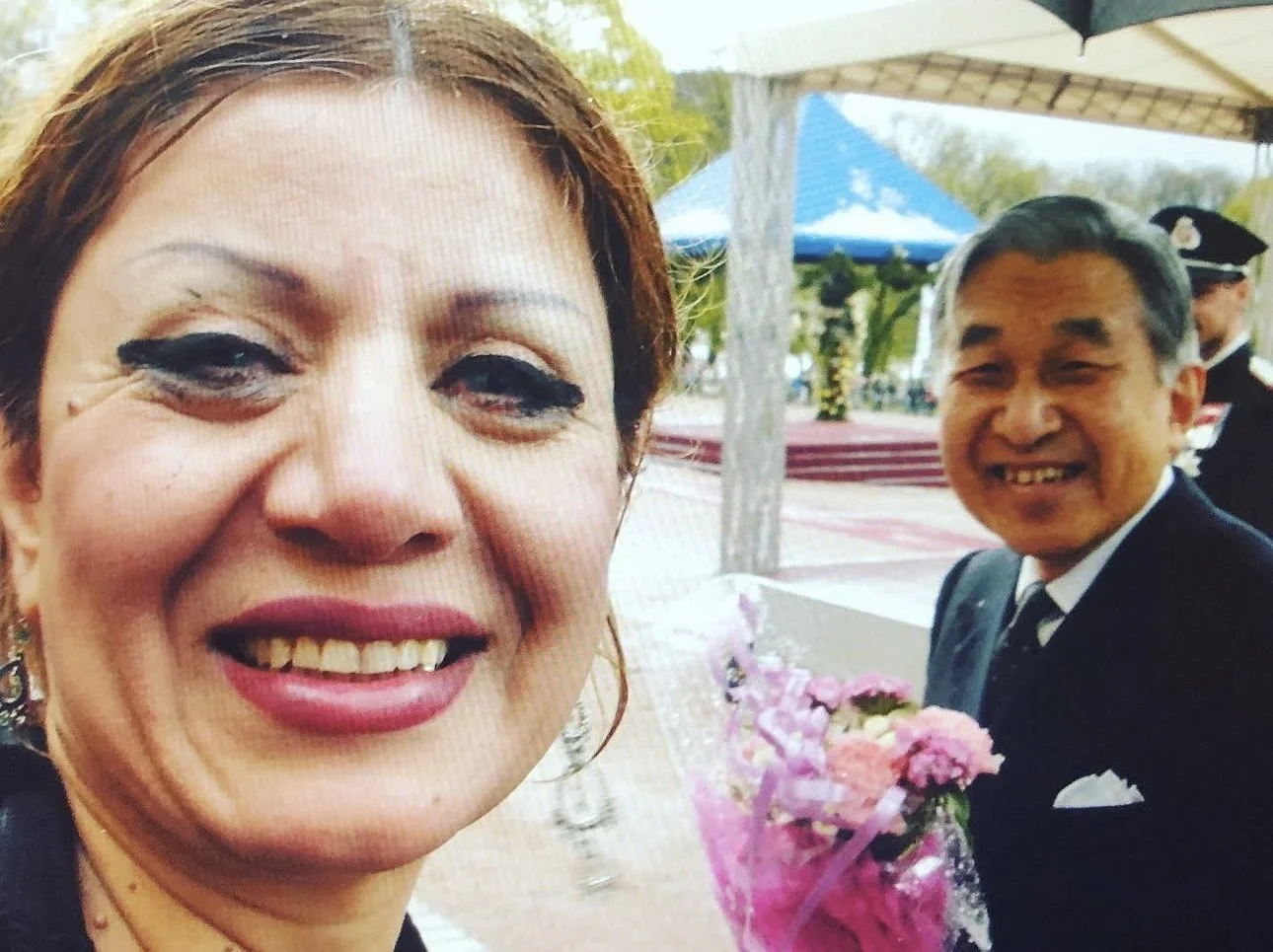
Japan: Silence, Transformation, and a New Way of Seeing
Chapter III
In my youth, life carried me to Japan.
Japan was not simply a country for me; it became an important chapter in the formation of my artistic and human vision.
Amid cherry blossoms, silence, discipline, and the subtle beauty of Japanese culture, my understanding of art deepened, and I became more familiar with Buddhist thought and the study of the human psyche.
But I did not want to understand life only from inside studios and galleries.
I entered the world of heavy industry and steel factories.
Among iron, fire, acid, immense machinery, weight, and demanding physical labor, I witnessed the transformation of matter.
Iron was cut.
It changed in fire.
It took shape under pressure.
And eventually, from all of this, a new form emerged.
There I understood that sometimes something must pass through hardship in order to become something new.
That experience later became part of the way I understood humanity.
Amid all that difficulty, I thought about justice, equality, dignity, and beauty.
Chapter VI
The Journey of My Art Through the World
My artistic journey has been connected with Japan, the United States, Norway, and other cultural environments that have each shaped part of my vision of art and humanity.
Over the years, my works have been presented in various exhibitions, and some have entered private collections.
Voice of America (VOA), the international broadcaster of the United States, has published reports about my exhibitions and artistic activities.
Two of my paintings, accompanied by two of my haiku poems, are owned by Emperor Akihito of Japan.
The painting “Autumn” is owned by former U.S. President Bill Clinton, and the work was displayed for a period on the walls of the White House.
Throughout this journey, I have also had encounters with figures from the worlds of culture, art, music, and public life, including Barack Obama and Quincy Jones.
For me, however, the value of these encounters is not in the fame of the names.
What remains with me is the human connection—the moment when art can shorten the distance between two people, two cultures, or two lands.
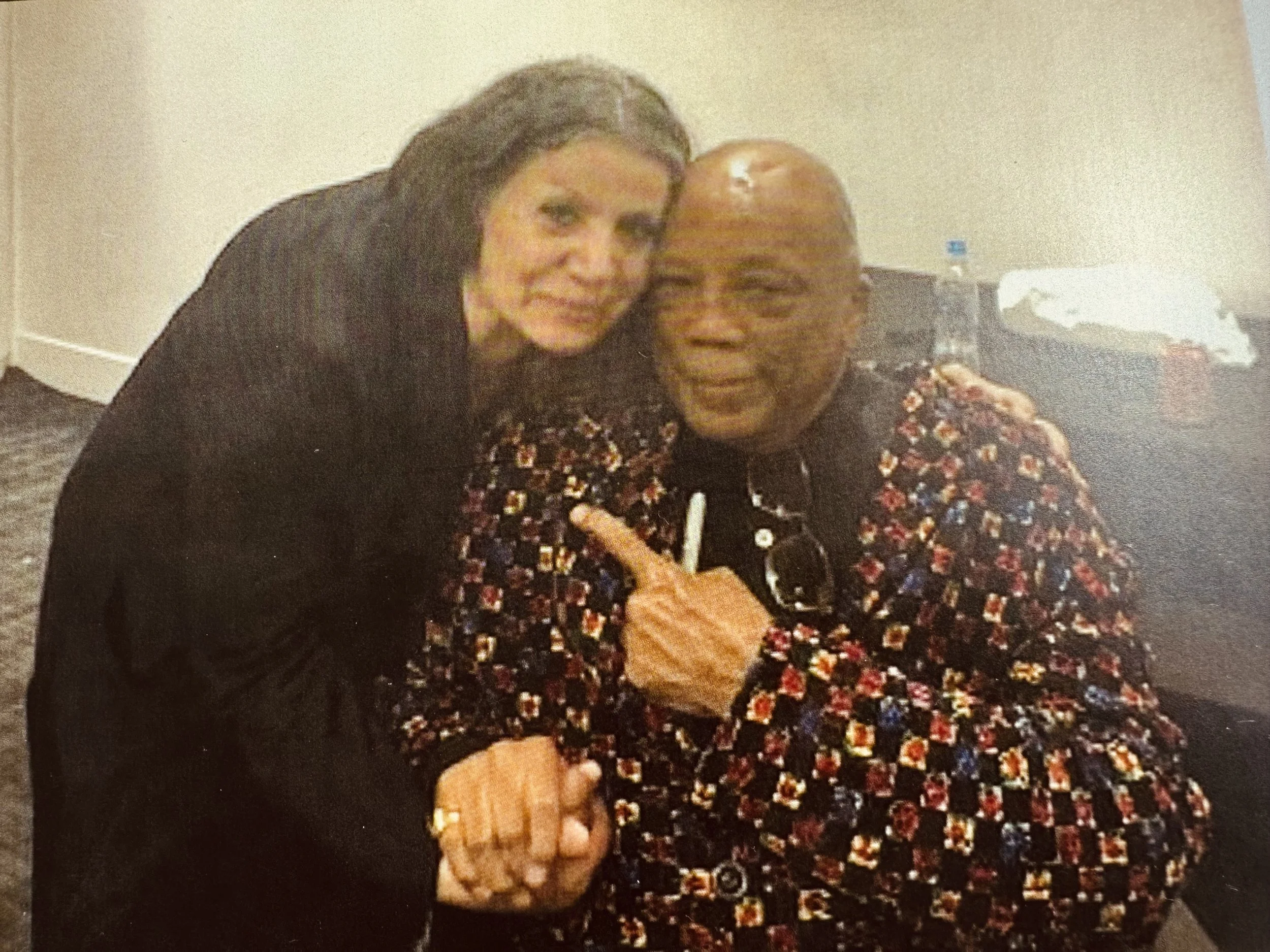
Mery with Quincy Jones
When Art Returns to Humanity
Chapter IV
For me, painting was never simply something to place on a wall.
A significant portion of my artistic income over the years was devoted to humanitarian causes—from helping equip surgical operating rooms to supporting women and children in need.
There was also a period when I painted near prison walls.
Some prison guards purchased my works, and I used the proceeds to provide food and essential necessities for prisoners who had no family or support outside those walls.
For me, these were never two separate things.
A painting began in my hand and sometimes continued its life in another human being’s life.
Chapter V
Norway: When Paintings Became a Form of Help
Following the devastating Bam earthquake in Iran on December 26, 2003, approximately one week later I held a charitable exhibition at the Intercultural Museum (IKM) in the Grønland district of Oslo, Norway.
At that time, people in Norway were also standing alongside relief efforts for those affected by the disaster.
A significant portion of my works was offered for sale in support of the earthquake victims, and the proceeds from the sales were donated to the Red Cross.
That day, painting took on another meaning for me.
The canvas was no longer merely a canvas.
Color was no longer merely color.
Each work could become a bridge between a person who wanted to help and a person who was suffering.
At various galleries, some of my paintings were also sold to support children with cancer.
More than ever, I felt that art could step beyond its frame and enter life.
The Journey of My Art Through the World
Japan
Silence and transformation became my teachers.
My voice reached new audiences through exhibitions and media.
United States
Norway
Art became a bridge of healing and humanitarian service.
And Now… The Silent Oracle
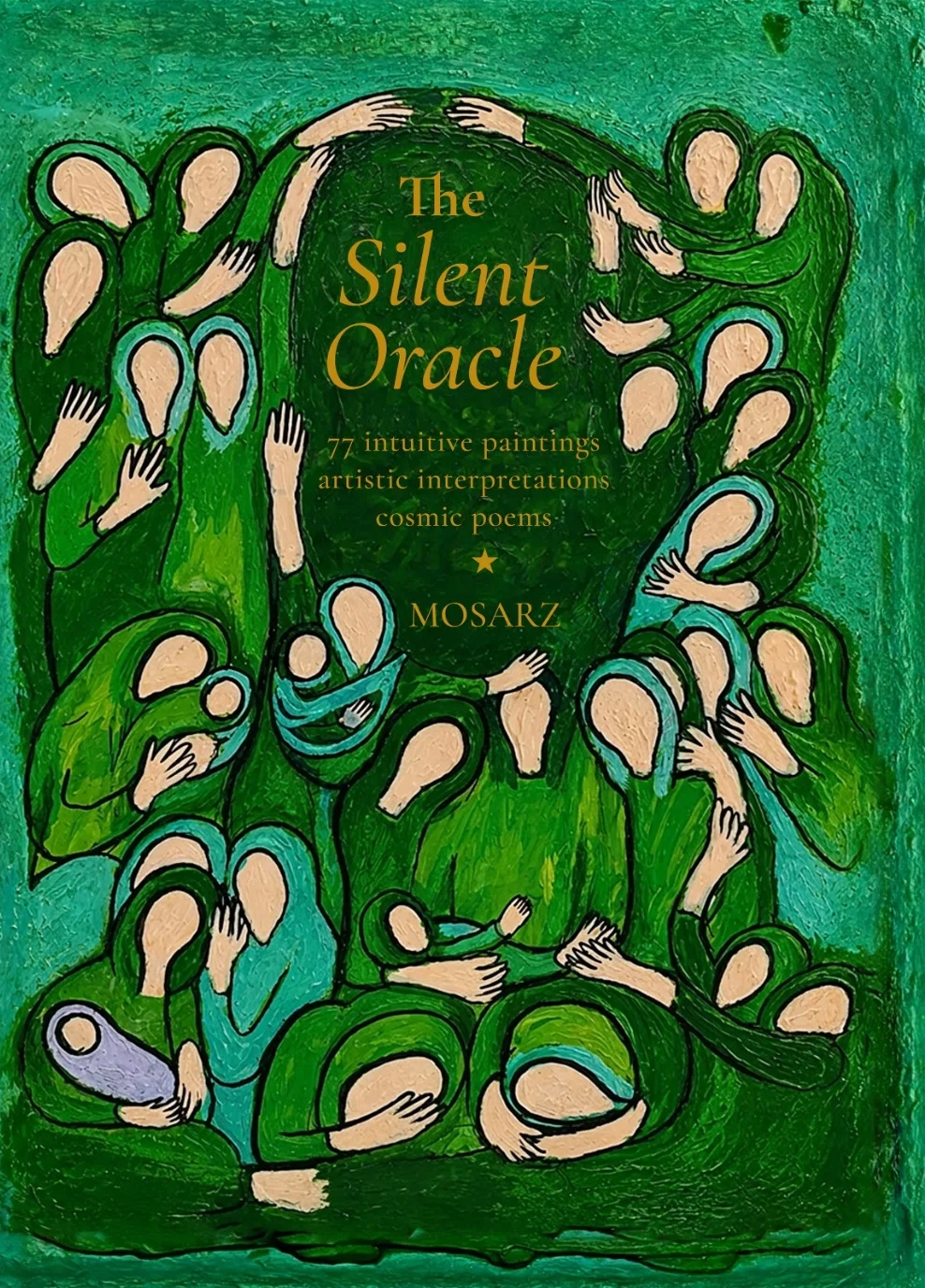
Years passed.
Poems became colors.
Colors became images.
Images became memories.
And the memories eventually gathered together in The Silent Oracle.
The Silent Oracle contains 77 original paintings—seventy-seven works, each accompanied by poetry, interpretation, thought, and an intuitive message.
Seventy-seven paintings.
Seventy-seven doors.
Seventy-seven moments in which to pause and look inward.
But The Silent Oracle is not the end of this journey.
It is only the beginning.
This book is the first window into a world that has been forming within my mind and soul for years—a world where painting, poetry, music, nature, architecture, sculpture, and gardens can exist together.
My dream is that, in the very near future, with your support and companionship, this book will move beyond its pages and become a living artistic world.
A world that may one day include gardens, exhibitions, museums, artistic and educational spaces, music, and places where people can experience art rather than simply observe it.
A place where one can walk through art.
A place where poetry can be felt.
A place where music can breathe.
And a place where nature is not merely the background of art, but part of the art itself.
The Silent Oracle is a book, but the dream behind it is larger than a book.
Everything that began in my childhood—the radio, the poems of my ninth year, the stars, geometry, psychology, philosophy, Japan, the steel factories, the galleries, the people I met, and the lives I touched—has gradually become part of one language.
All these years, I have been searching for a hidden thread connecting humanity, nature, beauty, and existence.
Perhaps I have been painting that very thread all these years.
And perhaps The Silent Oracle is the first place where I can gently place it into your hands.
This is only the first step.
I will build the continuation of this journey with you.
Mery Zamani — mosarz